

Read how ChatGPT describes your offer
ChatGPT visibility tracking begins with the complete answer. SearchSeal saves responses to your selected buyer questions so you can read how the business is named, which capabilities are emphasized and which rivals appear. Keep the question and date beside that wording when reviewing a finding with a colleague or product expert.
A brand mention may be part of a recommendation, comparison or explanation of a limitation. The surrounding text determines the task. If an answer omits a supported use case, inspect the page that should explain it. If it includes an outdated claim, compare the returned sources with your current published facts.
The useful outcome is a specific issue a website owner can resolve. SearchSeal connects the monitoring record to page evidence and a work list, making it easier to move from “we saw an answer” to “this explanation needs a correction.”
Track questions that matter before a purchase
Choose questions about the situations your product actually serves. Include category discovery, comparisons, setup conditions and the objections customers raise. Keep branded follow-ups separate from questions that ask for options without naming a company. That distinction helps you see whether the issue concerns discovery or the description of an already known brand.
For a fictional warehouse product, questions might concern offline scanning, supported devices and moving an existing catalog. Each question should have a reason for inclusion and a page that could provide useful information. Use language that a buyer would recognize rather than a list of internal feature names.
SearchSeal checks the saved questions daily as part of your plan. Keep the wording stable during a review period so later answers address the same decision. Add new topics deliberately when a new product, market or recurring customer need deserves attention.
Know which answers are being collected
The current plans monitor AI Overview, ChatGPT, Gemini and Perplexity. See the pricing page for the complete current engine list. SearchSeal collects app answers, with API fallback when an app answer cannot be collected, and retains collection context with the result.
The daily history lets you return to earlier responses when a description changes. Read the question, collection date and answer together. Compare like-for-like questions and look at the complete wording before treating a movement in a summary metric as a page problem.
Answer samples vary by collection conditions, and a before-and-after difference cannot prove that a page edit caused it. Use the saved responses to report the specific claims, sources and changes that were actually observed.
Inspect the pages behind an answer
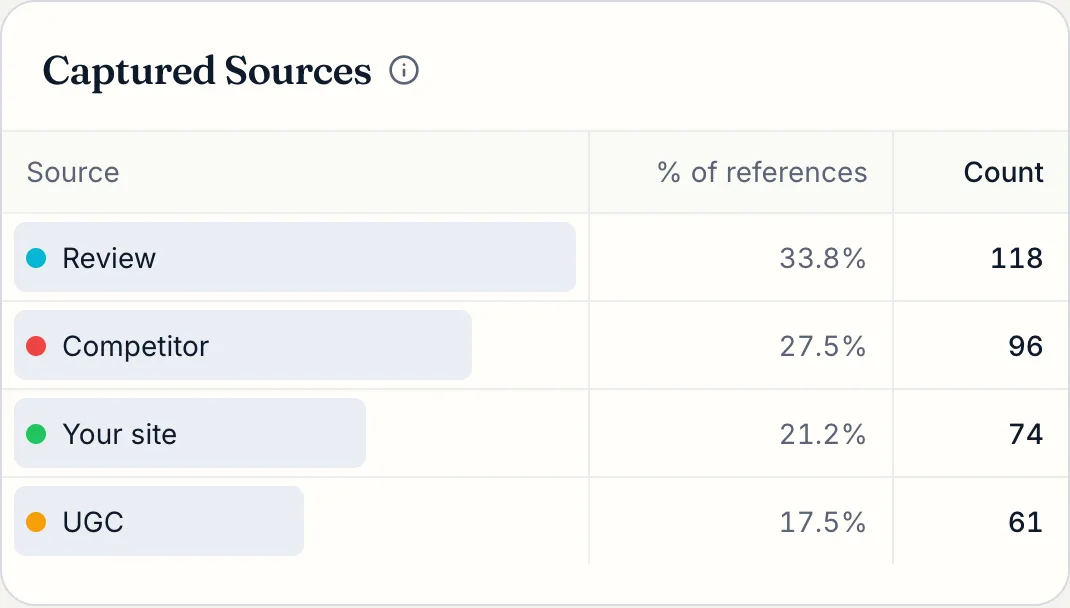
Source links can reveal which public explanations deserve a closer look. SearchSeal keeps URLs returned with each answer, allowing you to open your own pages, independent guides and competitor material. Read those pages against the actual question and the claim you want to investigate.
A recurring source might contain a useful comparison criterion your site barely explains. Another might repeat an old plan limit. These lead to different tasks: improve your own explanation in the first case, and prepare a supported correction request in the second. Preserve the original link so a reviewer can follow the investigation.
Use the citation tracking workflow when you need to distinguish a named brand, a returned URL and explicit citation evidence. For the page owner, the immediate benefit is having the original response and the relevant destination close together while deciding what to change.
Make the next edit specific and reviewable
SearchSeal's ranked fixes connect observations to pages and suggested work. Optional read-only Google Search Console data adds query and page demand to that decision. Review the evidence, choose an issue with a clear customer impact and agree on the fact the revised page must explain.
For example, a compatibility task might ask for supported device types, version requirements and a short setup example. A pricing task might ask for the counted unit and billing period beside the amount. Those are changes a product expert can approve and an editor can publish through the normal website process.
If you are looking for an LLM optimizer, this is the practical role SearchSeal fills: it helps identify and organize justified page improvements from saved answer evidence. You control the wording and publication. The workflow is most useful when someone owns the website changes that follow the review.
Check crawler policy when access is the issue
A missing or inaccurate answer can prompt several investigations. When the issue concerns access, inspect the relevant published crawler rules and the response from your site. OpenAI distinguishes OAI-SearchBot for search, GPTBot for training and ChatGPT-User for user-requested activity in its crawler documentation.
Use the robots.txt AI crawler checker to evaluate the rule for a specific path. Use the user agent checker to identify a token and find the owner's verification guidance. Both tools return results without an account and address a focused diagnostic question.
Actual crawler traffic and human AI referral analytics remain in your request logs and traffic systems; SearchSeal does not provide those analytics. Keep their evidence alongside answer tracking when needed, with each source labeled by what it observes. This gives a technical reviewer the right record to investigate.
Review the answer after the fix
Once the page update is published, mark the fix done and review later answer observations against the original issue. Check the relevant condition in the response, the sources returned and the available sample. Keep the publication date and answer dates visible so the review follows a clear sequence.
If the corrected fact appears in later answers, save an example and continue watching the question. If the old description persists, inspect which source still carries it. If the page now explains the task accurately but visitors struggle to complete it, move that investigation to your website experience and analytics workflow.
A useful weekly review ends with a decision: maintain the explanation, investigate a source or make another justified correction. SearchSeal keeps the original answer and completed task connected so that decision starts from the evidence already collected.
Bring one question to the first review
Choose a question tied to an important product decision and open the collected ChatGPT answer. Check the exact claim against your approved documentation. Follow the relevant source link and decide whether the issue belongs on your website or another publisher's page. Keep the factual correction short enough for its owner to review directly.
A useful first task might clarify which plans support a feature, add a setup prerequisite or explain a regional condition. Save the original observation and agree on the finished result before editing. This establishes the review habit you can repeat as the answer history grows. The next session can begin with the completed change, its publication date and the later responses to the same question.
Choose a plan for your question set
Starter costs $79 per month or $790 per year and includes 60 pooled questions. Pro costs $179 per month or $1,790 per year and includes 150 pooled questions. Max costs $399 per month or $3,990 per year and includes 400 pooled questions. Questions are pooled across unlimited brands. Starter includes a seven-day trial with a card required. The current pricing page explains billing and the plan details you should review before starting.
Choose capacity based on the buyer decisions you will inspect, not the number of slightly different ways you could phrase the same question. A compact set covering important use cases can produce a manageable queue of improvements. Expand when new observations have an owner and a clear purpose in the review.
Start with the free competitor check if you need a suggested company and rival set. Then select the questions to track in a plan. For the broader strategy behind the work, read AI SEO; for a plain-language answer-quality framework, read what AEO means.