

The rivals AI tools actually name
Your sales competitors may differ from the companies AI answers name. A buyer asking for alternatives may get a list that includes a newer tool, a marketplace or a business you have never considered a competitor. SearchSeal reads every saved answer for the brands it names, so you can see the field as the answers present it.
Begin with the rivals you know. During setup, SearchSeal suggests possible competitors from your site, and you can add any company by name, with its website if you like. After answers start arriving, a suggested list shows brands that appear in your answers but are not tracked yet, sorted by how often they are named. Track the ones that belong in your comparison and dismiss the rest.
Each brand can track up to 25 rivals on every plan. Names are matched in the answer text, so another rival uses no extra questions or answers.
Compare share of answers side by side
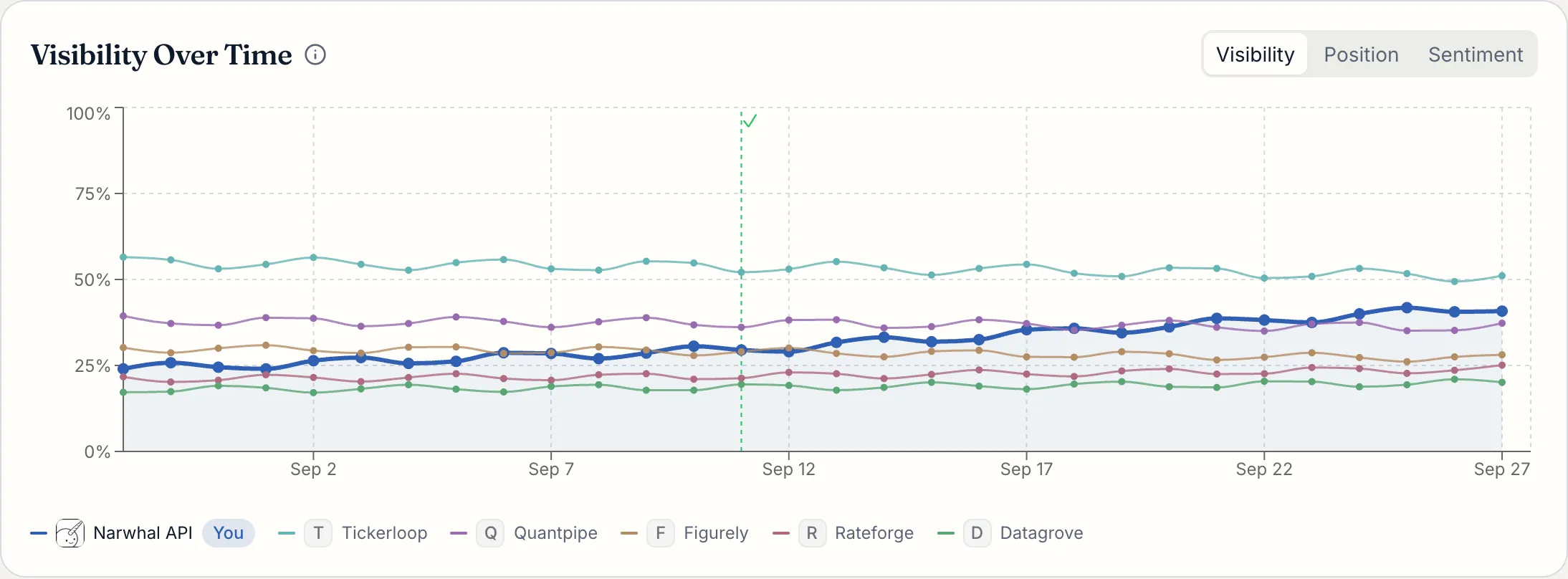
A table on the rivals page compares you with each tracked rival. For each brand it shows the share of saved answers that name it in the selected period, and the change in points against the previous period of the same length. A column per AI tool shows where each brand is strongest, with the top figure in each column marked.
Filter by time range, AI tool and region. If a rival was not tracked for the whole earlier period, its change shows as a dash instead of a misleading jump. This avoids making a new rival look like it surged overnight.
Read the table in two directions. A rival with a high share on one AI tool and a low share on the others can point to a source that tool relies on, such as a single review site or directory. A rival leading on every tool is more likely to appear widely in guides and comparisons.
The questions rivals win
The questions rivals win make up the page’s most useful list. A question appears there when its latest answer names a tracked rival and does not name you. Each row shows the rival named on the most AI tools, for example named on three of four, so you can see whether a gap is one tool or all of them.
Where SearchSeal already has a fix for that question, the row links to it. Read the saved answer for the rival’s description and the source links returned with it. That tells you what the answer relies on: a comparison guide, a review site, the rival's own pages or a page of yours that leaves out a key fact. The fix queue ranks the work that follows.
Rival tone and change alerts
Answers that name you and a rival are also labelled for tone, so the sentiment page can show how each tracked rival is described next to you. Shared reports show your top five rivals; the weekly email flags rivals gaining ground on your questions.
What rival tracking does not do
Only tracked rivals count. Brands you have not added still appear in the suggested list, but they are left out of the share table and the questions rivals win. Track a company that keeps appearing in suggestions to add it to the comparison.
The questions rivals win list looks at each question's latest answer. It is a snapshot, not a trend, and a single run can change it. A different spelling can also prevent a brand match. Read the answer before acting on a row.
Share of answers is not market share and not a ranking from the AI tools themselves. It describes a sample of answers to the questions you chose, on specific dates and tools. Samples vary by run, location and account. A rival’s lead on your questions points to what to inspect, not why buyers chose them.